Higher Education Direct Mail: Strategies, Benefits, & Campaign Ideas

Higher education institutions are competing for attention across crowded inboxes, social feeds, search results, and ad platforms. One effective way to grab attention, cut through the noise, and share your message is through a direct mail campaign.
Direct mail gives colleges, universities, and higher education organizations a tangible way to reach people at important moments. A well-planned mail piece can support recruitment, enrollment, alumni engagement, fundraising, and campus communications while working alongside digital channels like QR codes, landing pages, email follow up, customer relationship management (CRM) workflows, and retargeting.
In this article, we will cover what higher education direct mail is, how institutions use it, the most common formats, and what to consider before launching a campaign. We’ll also look at strategies for integrating direct mail with digital marketing to improve engagement and response.
What Is Higher Education Direct Mail?
Higher education direct mail is a targeted print communication strategy used by colleges, universities, community colleges, graduate schools, technical institutions, alumni offices, advancement teams, and other educational organizations to reach specific audiences through mailed materials.
These audiences may include:
- Prospective undergraduate students
- Parents and guardians
- Transfer students
- Graduate students
- Adult learners
- Accepted students
- Current students
- Alumni
- Donors
- Community members
- Employers and partners
- Faculty, staff, and internal stakeholders
Direct mail can take many forms, including postcards, brochures, letters, viewbooks, event invitations, donor appeals, newsletters, accepted student packets, welcome kits, branded boxes, and dimensional mailers. Some campaigns are broad awareness campaigns, while others are highly personalized, such as a scholarship reminder for an admitted student or a donor stewardship package for a major gift prospect.
The best higher education direct mail campaigns combine the credibility and staying power of print with the speed, tracking, and personalization of digital marketing.
Benefits of Custom Direct Mail for Colleges & Universities
Direct mail gives higher education teams another way to reach people when attention is limited and decisions are complex. The value comes from using print to deliver the right message, to the right audience, at the right moment in the enrollment, engagement, or giving journey.
Direct Mail Helps Institutions Stand Out from Digital Noise
Prospective students and families are constantly receiving emails, ads, texts, and social content from schools. Even strong messages can get buried.
Direct mail gives institutions another way to break through.
A postcard, brochure, or letter creates a physical touchpoint that feels different from another digital notification. The format alone doesn’t guarantee attention, but a well-designed piece with a clear message can make the institution more memorable.
Direct Mail Supports Targeted Recruitment & Enrollment Campaigns
Higher education audiences are not all the same. A high school senior, community college transfer student, graduate business prospect, adult learner, and parent of a first generation college student each has different questions and motivations.
Direct mail allows institutions to segment campaigns by audience type, geography, academic interest, inquiry stage, event history, application status, or giving behavior. Instead of sending the same message to everyone, schools can tailor content around what each recipient is most likely to care about. As a result, admissions and enrollment teams can support inquiry generation, application completion, campus visit registration, accepted student yield, deposit deadlines, and program specific outreach.
Direct Mail Reaches Families & Decision Influencers
Many higher education decisions involve more than one person. Parents, guardians, spouses, mentors, and other family members may influence where a student applies, visits, enrolls, or invests.
Direct mail sent to the home can reach the full household. A campus visit invitation may be seen by both a student and a parent, and a financial aid reminder may start a family conversation. Alternatively, an accepted student package creates excitement beyond the student alone.
This household level visibility is one of direct mail’s biggest advantages in student recruitment.
Direct Mail Builds Emotional Connection & Recall
Print has a different kind of impact than digital communication. Paper, imagery, packaging, personalization, and design all shape how the recipient experiences the message.
Higher education brands are built on trust, identity, tradition, outcomes, and community. Direct mail gives institutions a format where those ideas can be communicated with more depth and presence.
Direct Mail Supports Advancement & Donor Engagement
Direct mail is especially valuable for alumni relations and advancement teams. Fundraising is built on relationships, mission, and proof of impact. A thoughtful letter, impact report, campaign update, or thank you card can feel more personal than a short email.
Higher education direct mail can support annual fund appeals, giving days, capital campaigns, planned giving outreach, major donor stewardship, alumni events, and donor recognition. When combined with personalized messaging and strong storytelling, it can reinforce why giving matters and how donor support creates impact.
Direct Mail Becomes Measurable When Connected to Digital Tools
One outdated criticism of direct mail is that it is difficult to measure. That may have been more true in the past, but today’s campaigns can be tied to trackable digital actions.
Colleges and universities can use QR codes, personalized URLs (PURLs), campaign landing pages, dedicated phone numbers, reply cards, promo codes, event registration forms, and CRM tracking to understand how recipients respond.
The key is planning measurement before the campaign launches. If the mailer points to a generic homepage, tracking will be weak. If it points to a campaign specific destination with a clear action, results become much easier to evaluate.
Key Applications of Higher Education Direct Mail
Direct mail can support communication across the full higher education relationship cycle. From the first point of interest to enrollment, alumni engagement, fundraising, and community outreach, print gives institutions a practical way to deliver timely messages to the audiences that matter most.
Student Recruitment & Admissions
Admissions teams can use direct mail throughout the recruitment cycle. Campaigns may promote academic programs, open houses, campus tours, scholarships, application deadlines, financial aid resources, student outcomes, or specific enrollment pathways.
Examples include:
- Inquiry generation postcards
- Program-specific brochures
- Campus visit invitations
- Open house mailers
- Application deadline reminders
- Transfer student campaigns
- Graduate program outreach
- Adult learner recruitment mailers
- Scholarship and financial aid reminders
The strongest recruitment campaigns are not generic. They speak to a defined audience and guide the recipient toward a specific next step.
Enrollment Yield Campaigns
Once a student has been accepted, the institution still has work to do. Accepted students may be comparing multiple schools, discussing cost with family, waiting on aid packages, or feeling uncertain about the next step.
Direct mail can help build confidence and momentum during this period.
Accepted student packages, personal letters from admissions counselors, deposit deadline reminders, parent focused mailers, housing guides, orientation checklists, and welcome kits can all help students move from acceptance to enrollment.
This stage is where print can create a strong emotional impact. A well-produced accepted student packet or branded welcome box can make the student feel seen, wanted, and excited to belong.
Alumni Engagement
Alumni communications need to maintain connection long after graduation. Direct mail can help institutions keep alumni informed, invite them back to campus, promote reunions, share institutional updates, and create a stronger sense of pride.
Common alumni campaigns include:
- Alumni newsletters
- Reunion invitations
- Homecoming mailers
- Regional event invitations
- Alumni magazine inserts
- Career networking promotions
- Anniversary or milestone communications
- Branded keepsake pieces
Direct mail is useful here because alumni may not consistently engage with institutional emails. A printed piece can reintroduce the relationship in a more visible and memorable way.
Community Outreach & Institutional Awareness
Colleges and universities are often deeply connected to their surrounding communities. Direct mail can help promote public events, continuing education programs, workforce development opportunities, arts programming, athletics, lectures, community partnerships, and local initiatives.
Advancement & Fundraising
Advancement teams rely on trust, timing, and storytelling. Direct mail can support fundraising by making the ask more personal and giving donors something tangible to review, such as:
- Annual fund appeals
- Capital campaign mailers
- Giving day postcards
- Donor impact reports
- Planned giving letters
- Matching gift reminders
- Major donor stewardship packages
- Thank you cards
- Event invitations for fundraising galas or campaign launches
Strong fundraising mailers should clearly explain why the gift matters, what impact it creates, and how the donor can respond.
Student Retention & Campus Communications
Direct mail can also support current student communication and retention.
Institutions may use mail for orientation materials, advising reminders, housing communications, financial aid document reminders, wellness campaigns, parent and family updates, student services awareness, or important campus initiatives.
For messages that need to reach families or students outside crowded inboxes, print can add another layer of visibility.

Common Direct Mail Formats for Higher Education Organizations
The right format for higher education direct mail depends on the campaign goal, audience, message depth, budget, and desired response. A postcard may be perfect for a deadline reminder, while an accepted student package or donor impact mailer may need a more polished, memorable format. Choose the format that makes the message easier to notice, understand, and act on.
| Format | Description | Best For | Why It Works |
| Postcards | A simple, visible mail piece with a short message and clear CTA | Event invitations, campus visit promotions, deadline reminders, program awareness, giving day reminders, and quick updates | Easy to scan, cost effective for larger campaigns, and visible right away without requiring the recipient to open an envelope |
| Letters | A more personal or formal message sent in an envelope, often with inserts or reply materials | Admissions counselor outreach, scholarship notifications, accepted student communication, parent messaging, donor appeals, stewardship, planned giving, and thank you campaigns | Feels personal, official, and direct. It also works well with personalization based on name, program interest, graduation year, donor history, or location |
| Brochures and pamphlets | Folded print pieces that provide more room for visuals, details, and storytelling | Academic program promotion, graduate program marketing, transfer student outreach, continuing education campaigns, and campus experience messaging | Gives institutions space to explain value, highlight benefits, use imagery, and guide readers through a more detailed message |
| Booklets and catalogs | Larger, more comprehensive print pieces that showcase the institution, programs, campus life, outcomes, and student experience | Undergraduate admissions, graduate recruitment, high interest prospects, and audiences that need a deeper look at the institution | Creates a polished brand experience and gives students and families a reference piece they can revisit during the decision process |
| Invitations | Printed pieces designed to promote an event and drive RSVPs | Open houses, accepted student days, alumni events, donor receptions, fundraising galas, regional meetups, campus tours, and special academic events | Makes the event feel more important and gives recipients a clear reason to respond, especially when paired with a QR code or registration page |
| Welcome kits and accepted student packages | Multi-piece mailings or packages sent to create excitement and guide recipients through next steps | Accepted students, deposited students, new students, alumni welcome programs, and donor recognition | Builds emotional momentum, strengthens belonging, and can include practical items like checklists, maps, next step cards, branded materials, and digital resource links |
| Dimensional mailers and custom boxes | Premium mail pieces or packaged experiences that go beyond standard envelopes or flat mail | Competitive admissions campaigns, VIP prospects, major donors, alumni recognition, special announcements, and high value event invitations | Stands out immediately, feels intentional, and creates a more memorable experience. These campaigns require more planning around packaging, fulfillment, and mailing logistics |
| Newsletters and magazines | Recurring or long form print publications that share stories, updates, and institutional news | Alumni relations, donor stewardship, parent communications, campus updates, community engagement, and institutional storytelling | Supports long term relationship building by keeping audiences informed, connected, and engaged beyond a single campaign |
8 Things to Consider Before Launching a Higher Education Direct Mail Campaign
A successful direct mail campaign starts long before anything goes to print. Higher education teams need the right audience, message, timing, data, and production plan in place so the final piece does more than look good. It should support a clear goal and make the next step easy for the recipient.
1. Audience Segmentation
The first question is, “Who are we trying to reach?” A campaign for high school juniors should not look or sound like a campaign for adult learners. Similarly, a donor appeal will use a different message than an alumni event invitation.
Better audience segmentation leads to improved messaging, stronger creative, and more relevant calls to action.
2. Campaign Goal
Every campaign needs a clear goal. Are you trying to generate inquiries, increase campus visit registrations, encourage applications, improve yield, collect donations, promote an event, or strengthen alumni engagement? When the goal is vague, the mailer usually becomes vague too. A focused objective helps guide the format, copy, design, offer, timing, and measurement plan.
3. Message Relevance
The recipient should quickly understand why the message matters right now. That means the copy needs to connect to their stage, motivation, and next step.
For a prospective student, the message may focus on outcomes, program fit, affordability, or campus experience. For a parent, it may focus on value, support, safety, and financial planning. For a donor, it may focus on impact, legacy, or urgency.
The more relevant the message, the less the mailer feels like mass marketing.
4. Data Quality
Poor data weakens even the best creative campaign, so list hygiene, address verification, deduplication, and segmentation should happen before production begins. Mailing lists should be reviewed for accurate names, addresses, segments, personalization fields, and duplicate records.
This process is especially important when using variable data printing or personalized messaging. A wrong name, outdated address, or mismatched program interest can damage trust and waste budget.
5. Timing & Academic Calendar Alignment
Higher education campaigns live or die by timing. A campus visit mailer sent too late may miss the registration window, for example, and a financial aid reminder after the deadline is useless.
Campaigns should be planned backward from key dates, including application deadlines, open house dates, orientation schedules, reunion weekends, giving days, fiscal year end goals, and donor campaign milestones.
Direct mail requires time for strategy, writing, design, approvals, printing, addressing, mailing, and delivery. Build that time into the plan.
6. Creative & Brand Consistency
Every mail piece reflects the institution. Design, paper choice, print quality, photography, typography, and messaging all influence perception.
For higher education, brand consistency is important. The mailer should feel connected to the institution’s website, admissions materials, advancement campaigns, and overall identity. A polished, professional piece can make the school feel more credible and organized.
7. Compliance & Privacy
Higher education organizations handle sensitive student, alumni, donor, and family information. Direct mail campaigns should be reviewed with privacy, data security, and internal approval processes in mind. Avoid exposing sensitive information on the outside of mail pieces. Review personalization rules carefully, and make sure data files are handled responsibly throughout production.
8. Budget & Production Requirements
Direct mail costs depend on format, quantity, paper, finishing, personalization, postage, packaging, kitting, and mailing services. A postcard campaign has very different production needs than a custom accepted student box.
An experienced printing partner can help with these details. Early input from the experts can uncover more efficient formats, postage options, paper choices, mailing approaches, and production timelines.
Effective Strategies for Higher Education Direct Mail Campaigns
Strong direct mail campaigns are built with intention. The message, format, design, timing, and follow up should all work together to move the recipient toward a clear next step. These direct mail strategies can help higher education teams make each campaign more relevant, measurable, and effective.
Start with One Audience & One Action
The strongest direct mail campaigns are focused. They know exactly who they are speaking to and what they want that person to do next.
Examples include:
- Registering for an open house
- Scheduling a campus visit
- Completing an application
- Submitting an enrollment deposit
- Exploring a specific program
- RSVPing for reunion weekend
- Making a gift
- Scanning to view a student story
Trying to accomplish too much in one piece usually weakens the message. A clear audience and call to action (CTA) make the campaign easier to understand and easier to measure.
Use Personalization Beyond the Recipient’s Name
Personalization should go deeper than “Dear [First Name].” Institutions can personalize by program interest, region, student type, application stage, graduation year, donor history, event location, or previous engagement. A higher level of relevance can make direct mail feel more intentional and less like a generic blast.
Connect Print to Digital Experiences
Every direct mail campaign should make the next step simple. QR codes, PURLs, landing pages, event forms, virtual tour pages, giving pages, and SMS opt-ins can all connect the physical piece to a digital action.
The digital destination should match the campaign. Sending everyone to the homepage creates friction. Sending recipients to a campaign specific landing page gives them a clearer path and gives the institution better tracking.
Build Multi-Touch Campaigns
Direct mail is often more effective when it’s part of a larger campaign sequence. For example, an open house campaign might include:
- A targeted postcard invitation
- A matching email invitation
- A landing page with registration
- Retargeting ads for visitors who do not register
- A reminder email or text before the event
- A follow-up mailer or email after attendance
This kind of sequence gives the campaign more chances to create action.
Make the CTA Obvious
The recipient should not have to work to understand the next step. The CTA should be clear, visible, and easy to complete. Strong examples include:
- “Scan to RSVP.”
- “Schedule your campus visit.”
- “Complete your application.”
- “Make your gift today.”
- “Explore the program.”
- “View your admitted student checklist.”
- “Register for Accepted Student Day.”
Avoid burying the CTA in a long paragraph or including too many competing actions.
Use Storytelling & Proof
Higher education marketing needs both emotion and evidence. Direct mail can feature student success stories, alumni outcomes, faculty expertise, scholarship opportunities, donor impact, research achievements, community partnerships, or campus experiences.
Stories make the institution feel real, and proof makes the message more credible. Together, they help recipients understand why the institution matters and why they should take the next step.
Test Formats, Messages, & Audiences
Not every campaign needs to be a massive rollout. Institutions can test different formats, messages, creative approaches, CTAs, or audience segments before scaling.
A school might test a postcard against a letter, compare two program messages, or send different versions to parents and students. Advancement teams might test donor appeal language, envelope styles, reply devices, or impact stories.
Testing helps teams make better decisions over time instead of relying on assumptions.
Coordinate Early with Print & Mail Production Teams
Direct mail is strategic, but it’s also operational. Format, size, paper, folds, addressing, personalization, postage, mailing class, kitting, fulfillment, and delivery timelines all affect the campaign.
Bringing a print and direct mail partner into the process early can prevent costly mistakes. It can also help institutions identify better production options, improve mailing efficiency, and create a smoother path from concept to delivery.

The Role of Integrated Direct Mail Campaigns
Integrated digital mail campaigns combine physical mail with digital channels to create a more connected recipient experience. For higher education, this process is especially important because the decision journey is rarely linear.
A prospective student might receive a postcard, scan a QR code, visit a landing page, watch a video, get retargeted with a social ad, receive an email reminder, and later register for a campus visit. A donor might receive an appeal letter, visit a campaign page, watch an impact story, and make a gift online.
Direct mail creates the moment of attention. Digital channels make the next step easier to track, automate, and nurture.
Common integration tactics include:
- QR codes that lead to event registration pages
- PURLs for admissions or donor campaigns
- Landing pages tailored to each audience segment
- Email follow up tied to the same campaign theme
- Retargeting campaigns for recipients who visit the landing page
- CRM workflows for admissions or advancement follow up
- SMS reminders for event attendance or deadlines, where appropriate
- Campaign specific forms that track inquiries, registrations, applications, or gifts
The most important rule is consistency. The mailer and digital destination should look and feel connected. If a postcard promotes an open house, the QR code should lead directly to that open house registration page, not a generic admissions homepage.
Integrated campaigns also help teams measure performance more clearly. Instead of wondering whether a mailer worked, institutions can track scans, visits, submissions, registrations, gifts, and downstream conversions.
FAQs About Direct Mail for Higher Education
Is Direct Mail Still Effective for Colleges & Universities?
Yes, direct mail can still be effective when it is targeted, relevant, well designed, and connected to a clear next step. It helps institutions stand out in a crowded digital environment and gives important messages a physical presence. Direct mail is strongest when it works alongside digital channels instead of operating as a standalone tactic.
How Can Higher Education Institutions Use Direct Mail for Student Recruitment?
Institutions can use direct mail for inquiry generation, campus visit invitations, open house promotions, program specific outreach, accepted student campaigns, scholarship reminders, application deadline reminders, transfer student recruitment, and graduate program marketing. The key is to match the campaign to the student’s stage in the enrollment journey.
What Types of Direct Mail Work Best for Higher Education?
The best format depends on the goal. Postcards work well for quick reminders and event promotion. Letters are strong for personal outreach and donor appeals. Brochures and viewbooks help explain programs and experiences. Welcome kits and custom boxes can create memorable moments for accepted students, alumni, or donors.
How Can Direct Mail Be Integrated with Digital Marketing?
Higher education teams can integrate direct mail with QR codes, PURLs, landing pages, email follow up, social retargeting, CRM workflows, SMS reminders, and campaign specific forms, which connect the mail piece to a measurable digital action.
What Should Colleges Include in a Direct Mail Campaign?
A strong campaign should include a defined audience, focused message, branded design, clear CTA, accurate mailing data, relevant offer or reason to respond, and a digital path for next steps. The campaign should also have a measurement plan before it launches.
How Far in Advance Should Higher Education Teams Plan Direct Mail Campaigns?
Teams should plan far enough ahead to allow for strategy, copy, design, approvals, list preparation, printing, addressing, postage planning, mailing, and delivery. Additionally, the timeline should work backward from the date by which the recipient needs to respond.
Can Direct Mail Help with Alumni Giving & Fundraising?
Yes. Direct mail can support annual fund appeals, donor stewardship, planned giving, capital campaigns, giving days, event invitations, thank you communications, and impact reports. Personalization and storytelling are especially important for advancement campaigns.
Why Work with an Experienced Direct Mail Printer?
An experienced direct mail printer can help with format selection, print quality, personalization, mailing requirements, postage efficiency, production timelines, packaging, kitting, and fulfillment. Partnering with a printer early reduces errors and helps institutions create more professional, effective campaigns.
Bring Your Higher Education Direct Mail Campaign to Life with United GMG
Direct mail gives higher education institutions a personal, tangible way to connect with prospective students, families, alumni, donors, and community members. It can support enrollment, improve engagement, strengthen advancement campaigns, and make important messages easier to remember.
Whether your institution needs postcards, brochures, letters, viewbooks, event invitations, alumni mailers, donor appeals, accepted student packages, welcome kits, signage, or custom boxes, the right print and direct mail partner can make the process easier and more effective.
At United GMG, we work with schools and educational institutions to support high-quality printing, direct mail, and signage. If your college, university, or higher education organization is planning a recruitment, enrollment, alumni, advancement, or campus communication campaign, we can help you bring it to life.
See how far your message can go when it’s in the right hands. Contact us today to get a free quote, discuss your next higher education direct mail project, and explore the best print and mailing options for your goals.

About the author
Bella Ortloff
Continue reading
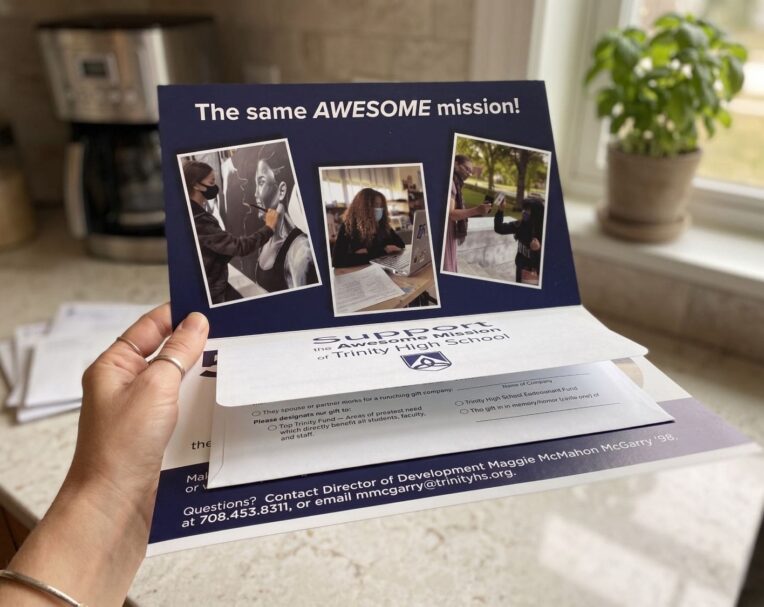
Custom Direct Mail for Private Schools: Tips for Marketing to Parents & Guardians
In a world of emails and social posts, private schools face a unique challenge: how to stand out from the crowd while…
USPS Mail Classes: A Guide for Businesses & Nonprofit Organizations
Mail still shows up where emails get ignored. From invoices and customer notices to promotional pieces and publications, businesses continue to rely…
Direct Mail QR Codes & PURLs: Bridging the Gap Between Print & Digital
Direct mail is often underestimated in a world dominated by digital marketing. However, when combined with modern tools like QR codes and…
