Envelope Guide: Sizes, Types, Materials, & Closures

An envelope is often the first physical touchpoint between your business and your audience. Before a letter is read, a proposal is reviewed, a catalog is flipped through, or a promotion is considered, the envelope sets the tone. It signals professionalism, hints at what’s inside, and can influence whether it gets opened or ignored.
Choosing the right envelope is not just about fit. It affects mailing costs, protects your materials, and shapes how your brand is perceived. With so many options available, learning the differences can help you make smarter decisions for every mailing project.
In this article, you’ll find a breakdown of the most common envelope types, sizes, materials, and closure options, along with practical guidance to help you choose the right combination for your specific mailing needs. Whether you’re sending everyday business correspondence or high-impact marketing pieces, this guide will help you make more informed decisions.
The Importance of Envelopes
Envelopes play a bigger role than most people give them credit for. They’re not just a functional necessity. They also influence perception, protect valuable information, and directly impact how your message is received. Understanding their role can help you make better decisions across every mailing you send.
They Create a First Impression
Before your message is ever seen, the envelope has already communicated something about your brand. A plain or poorly chosen envelope can make important content feel generic or low value. On the other hand, a well-designed envelope signals professionalism, attention to detail, and intent. It sets expectations for what’s inside and can make the difference between being opened or ignored.
They Protect What Matters
Mail goes through multiple stages of handling, sorting, and transportation. Without the right envelope, contents can bend, tear, or arrive damaged. The right size, structure, and material help keep documents intact from start to finish. It’s especially important for contracts, financial documents, and high-value marketing materials.
They Influence Response Rates
In direct mail and marketing campaigns, the envelope acts as a gatekeeper. If it does not capture attention or create curiosity, the contents may never be seen. Envelope design, material, and format all play a role in whether a recipient opens the envelope or discards it. A thoughtful approach can improve engagement and increase the effectiveness of your campaign.
They Support Organization & Compliance
Standardized envelope sizes and formats make mailing more efficient and predictable. They help align with postal requirements, reduce processing issues, and simplify bulk mailing. For businesses sending high volumes of mail, consistency in envelope selection also supports internal organization and smoother operations.
Different Types of Envelopes
Some envelopes are built for speed and efficiency, while others are designed to stand out or protect heavier materials. The type of envelope you choose should match how your content is formatted, how it will be handled, and what kind of impression you want to create.
Commercial Envelopes
Commercial envelopes are the standard for everyday business communication. They feature an angled flap and are designed for efficiency and compatibility with automated mailing systems. Common sizes include #6¼, #6¾, #7¾, #8⅝, #9, #10, #11, #12, and #14.
These envelopes are widely used for letters, invoices, statements, and direct mail campaigns. If you are sending high volumes of routine mail, commercial envelopes (#10) are usually the most practical option. They also pair well with window options and self-seal closures, which can speed up fulfillment and reduce manual effort.
Announcement/A-Style Envelopes
Announcement envelopes offer a more refined look. Their proportions feel more balanced, giving them a slightly more formal appearance than standard commercial envelopes. Available in sizes like A-6, A-7, A-8, A-9, and A-10, they are commonly used for invitations, greeting cards, and announcements.
If your goal is to elevate presentation or create a more personal feel, this style is a strong choice. They are often paired with thicker stocks or textured materials to enhance the overall experience.
Square Envelopes
Square envelopes have equal width and height, making them visually distinctive.
They are often used for marketing pieces and invitations where standing out in the mailbox is a priority. Their unique shape naturally draws attention compared to standard formats. However, they typically require additional postage due to their non-standard dimensions, which makes them better suited for targeted campaigns where impact matters more than cost efficiency.
Booklet Envelopes
Booklet envelopes open on the long side, which makes inserting documents faster and more efficient. They are commonly used for booklets, brochures, and multi-page documents.
They are a strong option when you need to send multiple pages without folding them excessively. If your mailing involves thicker or bulkier materials, this format simplifies handling and reduces the risk of bending.
Catalog Envelopes
Catalog envelopes open on the short side and are built with a center seam for added strength. They are designed to handle heavier contents and larger documents. When durability is a challenge, especially for important or high-value materials, catalog envelopes provide extra protection.
If your mailing includes dense or weighty items, catalog envelopes offer more structural support and reduce the risk of damage during transit.
Standard Envelope Sizes
Selecting the right size helps avoid wasted space, unnecessary postage, and damage during transit.
| Size | Dimensions | Best For |
| #6¼ | 3½” x 6” | Small mailings, statements |
| #6¾ | 3⅝” x 6½” | Checks, statements |
| #7 | 3¾” x 6¾” | Folded documents |
| #7¾ | 3⅞” x 7½” | Business correspondence |
| #8⅝ | 3⅝” x 8⅝” | Longer folded letters |
| #9 | 3⅞” x 8⅞” | Reply envelopes |
| #10 | 4⅛” x 9½” | Standard business letters |
| #11 | 4½” x 10⅜” | Larger documents |
| #12 | 4¾” x 11” | Brochures, expanded mailings |
| #14 | 5” x 11½” | Large flat documents |
| A-6 | 4¾” x 6½” | Invitations, cards |
| A-7 | 5¼” x 7¼” | Greeting cards |
| A-8 | 5½” x 8⅛” | Announcements |
| A-9 | 5¾” x 8¾” | Invitations |
| A-10 | 6” x 9½” | Flat mailings |
While standard sizes cover most mailing needs, some printing providers also offer custom sizing options for projects that call for a unique format, specialized insert, or more distinctive presentation.
Envelope Material Types
The material you choose affects how your envelope looks, feels, and performs in transit. From everyday business mail to high-impact marketing pieces, the right material can influence both perception and durability.
White Wove (Standard)
White wove is the most commonly used envelope material. It features a smooth, uncoated surface that delivers a clean and professional appearance. It’s highly versatile and works well for text-heavy printing, making it a reliable choice for invoices, statements, and general business correspondence.
Using standard white wove envelopes also helps keep costs manageable, which is important for high-volume mailings.
Coated
Coated envelopes have a treated surface that enhances how ink sits on the paper, resulting in sharper details, more vibrant colors, and a more polished overall look. They are a strong option for branded mailings, promotional campaigns, and any application where visual presentation plays a key role. If your envelope includes graphics, logos, or bold color elements, coated stock can help them stand out more effectively.
Textured & Specialty
Textured and specialty materials add a tactile dimension that standard papers do not offer. From subtle finishes to more pronounced textures, these envelopes create a distinct feel in hand.
They are often used for invitations, premium marketing pieces, and communications where you want to create a more memorable experience. The added texture can signal quality and attention to detail, which can elevate how your message is perceived before it is even opened.
Envelope Closure Types & Flap Options
How an envelope closes might seem like a small detail, but it affects speed, security, and the overall experience for both sender and recipient. The right closure can streamline fulfillment, protect contents, and even influence how polished your mail feels.
Peel & Seal/Self-Seal
Peel and seal closures use a pressure sensitive adhesive covered by a removable strip. Once the strip is removed, the flap folds down and sticks firmly in place.
Self-seal options typically use interlocking adhesive surfaces that bond when pressed together, again without the need for moisture.
These closures are popular for high volume mailing because they are fast, clean, and consistent. They reduce manual effort, eliminate the need for water or sponges, and help maintain a uniform seal across large batches. For teams handling frequent or large scale mailings, this type of envelope can significantly improve efficiency.
Flap Styles
Flap design influences both appearance and strength. The shape of the flap can subtly change how formal, modern, or durable an envelope feels.
Here are some of the most common envelope flap types:
- Commercial flap: Angled shape commonly used for standard business envelopes
- Wallet flap: Straight and narrow, offering a clean and modern look
- Square flap: Straight across for a balanced and symmetrical appearance
- Pointed flap: Angled toward the center for a more traditional or formal feel
- Catalog flap: Deeper straight flap designed to provide added strength for heavier contents
Choosing the right flap style comes down to both function and presentation. For everyday business mail, commercial or wallet flaps are practical and efficient. For invitations or branded materials, square or pointed flaps can elevate the look. When mailing heavier items, catalog flaps provide the added support needed to keep contents secure.
Finishing Options for Custom Envelopes
Finishing options take an envelope from purely functional to something that actively supports your brand and presentation. These enhancements can improve durability, add visual interest, and create a more polished final product.
Folding
Folding plays a critical role in how an envelope is constructed and how it performs. Precise folding creates clean edges, consistent structure, and a professional appearance across every piece.
For large print runs, consistency is key. Well-executed folding helps maintain uniformity, which is especially important when envelopes need to feed through automated systems or align with other printed materials.
Die Cutting
Die cutting allows for custom shapes and cutouts that go beyond standard envelope designs—window placements for addresses, unique design elements, specialized openings—to add both function and visual appeal. It is a strong option when you want your envelope to stand out or serve a specific purpose beyond simple containment.
Coatings
Coatings enhance both the look and durability of an envelope. They can add a subtle sheen, protect against smudging, and improve how the envelope holds up during handling and transit. For branded mailings, coatings can elevate the overall finish and make colors appear more refined, helping your envelope feel more intentional and high quality.
Tips for Choosing the Right Envelope for Your Next Mailing Project
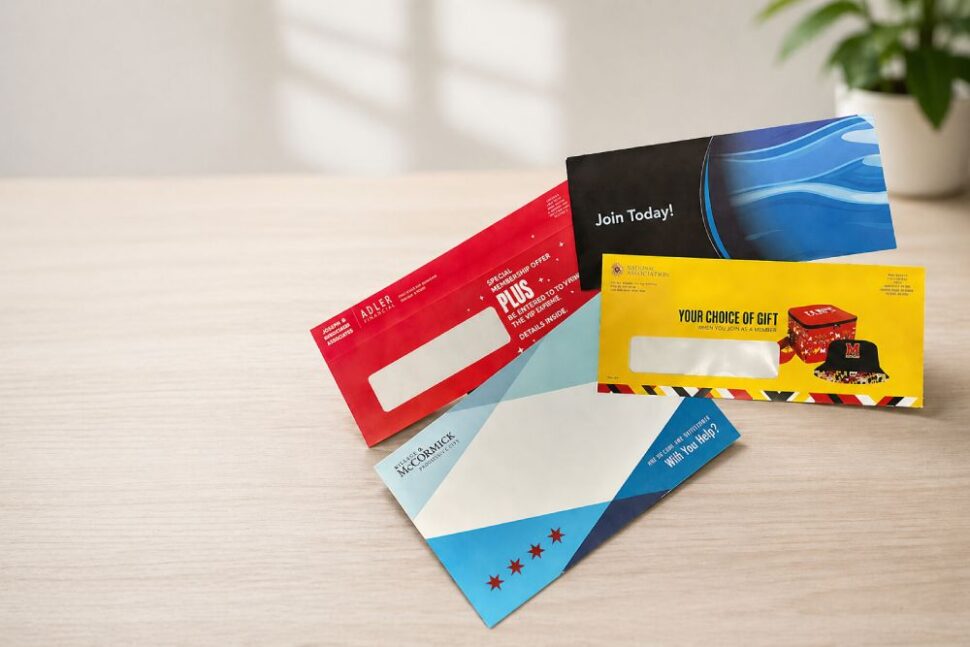
Choosing the right envelope comes down to aligning your content, goals, and operational needs. A few strategic decisions upfront can save money, improve presentation, and increase the effectiveness of your mailing.
Match the Envelope to Your Contents
Start with what you are sending. The size, weight, and format of your materials should guide your envelope choice. Thicker documents, multiple pages, or inserts may require booklet or catalog envelopes, while simple letters typically fit within standard commercial options.
Select the Right Size for Efficiency
Choose a size that fits your contents comfortably without forcing folds or leaving excessive empty space. Overstuffed envelopes can tear or look unprofessional, while oversized ones may increase postage costs and reduce efficiency.
Choose Materials That Reflect Your Brand
The look and feel of your envelope sets expectations before it is opened. Standard materials work well for everyday communication, while coated or textured options can elevate branded or high-impact mailings. Think about how you want your audience to perceive your message before they even see what is inside.
Align the Closure with Your Workflow
Different closure types serve different operational needs. High-volume mailings benefit from peel and seal or self-seal options that speed up fulfillment. Lower-volume or more formal mailings may allow for traditional flap styles that emphasize presentation.
Factor in Postal Requirements & Costs
Envelope shape and size can directly impact postage. Non-standard formats, such as square envelopes, often come with additional fees. Planning around these requirements can help you avoid unexpected costs and delays.
Use Finishing Options Strategically
Finishing touches like coatings, die cuts, or full-color printing can make your envelope more noticeable and more aligned with your brand. These enhancements are especially valuable for marketing campaigns where the goal is standing out in the mailbox.
Partner with the Right Printing Company
Working with the right printing partner can make a significant difference in both quality and efficiency. An experienced provider can guide material selection, recommend the right specifications, and help you avoid costly mistakes like incorrect sizing, poor print quality, or mailing issues. This kind of support helps you get better results from every project instead of relying on guesswork.
Envelope FAQs
What Are the Different Types of Mailing Envelopes?
The most common mailing envelopes include commercial envelopes for everyday business use, announcement envelopes for invitations and cards, square envelopes for standout designs, booklet envelopes for multi-page documents, and catalog envelopes for heavier materials.
What Is the Most Common Type of Envelope?
Commercial envelopes are the most widely used. Their standard sizing, compatibility with mailing systems, and versatility make them the go-to choice for business communication.
What Are the Different Closure Types for Envelopes?
Common closure options include peel and seal or self-seal for convenience, along with various flap styles such as commercial, wallet, square, pointed, and catalog flaps. Each offers a different balance of appearance and functionality.
What Is the Most Common Envelope Size for Business Use?
The #10 envelope is the most commonly used size for business mail. It is designed to hold standard letter-size paper folded into thirds, making it ideal for invoices, statements, and correspondence.
When Should I Use a Booklet vs. Catalog Envelope?
Booklet envelopes open on the long side, making them easier to fill with multiple pages or brochures. Catalog envelopes open on the short side and offer greater strength, making them better suited for heavier or more important contents.
Do Square Envelopes Require Extra Postage?
Yes, square envelopes typically require additional postage because they do not meet standard mailing dimensions.
What Material Is Best for Branded Envelopes?
Coated materials are ideal for vibrant graphics and color accuracy, while textured or specialty materials work well when you want to create a more premium or tactile experience.
Can I Print Full-Color Designs on Envelopes?
Yes, full-color and full-bleed printing options allow you to incorporate branding, graphics, and messaging directly onto the envelope.
Can I Order Custom Sizes?
Custom envelope sizes are available for projects that require a specific format or unique presentation.
Print Custom Envelopes with United GMG
The right envelope shapes how your message is received, protects its contents, and influences how your brand is perceived. From selecting the right size and material to choosing the best closure and finishing options, each decision plays a role in the success of your mailing.
Working with a knowledgeable printing partner makes that process easier. United GMG offers a wide range of envelope options along with the expertise to help you choose what works best for your needs.
If you are planning a mailing project or looking to improve your current materials, we’ve got you covered.
At United GMG, we’re a one-stop shop for all your mailing needs. We offer a wide range of envelope options along with the expertise to help you choose what works best for your needs. Our team is ready to show you our selection or create a custom envelope for your next project.
See the difference an envelope can make. Contact us today to get a free quote and learn more.

About the author
Bella Ortloff
Continue reading
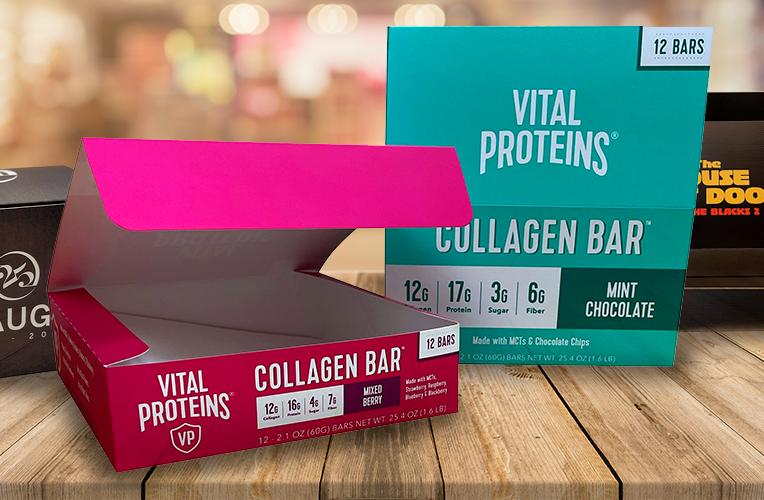
12 Unique Retail Packaging Ideas to Help You Stand Out & Build Your Brand
For retailers, packaging is one of the most powerful yet overlooked marketing tools available. It introduces the brand, creates anticipation, protects the…
Is Direct Mail Effective? 10 Reasons Why Direct Mail Still Works
Direct mail marketing has been around for decades, and despite the rise of digital advertising, it continues to deliver results. Although some…
Direct Mail vs Digital Marketing: Finding the Right Balance
In the great marketing debate of direct mail vs. digital, where does your business stand? Both strategies certainly have their advantages (and…
