
Bindery guide

A Guide to Booklet Binding & Stitching Options

The binding decides how a booklet looks, how it opens, how long it lasts, and whether it mails clean. Seven methods from our bindery, numbered below — and the four factors that pick between them.

  • 01 Saddle
  • 02 Perfect
  • 03 Wire-O & Coil
  • 04 Singer Sewn
  • 05 Thread Sewn
  • 06 Side
  • 07 Case

BND 01 The specimens

Seven binding methods, compared

Each method holds the pages a different way — and each carries its own page-count range, feel, and mailing behavior. The drawn spine on every card is the fastening itself.

№ 01 Wire

Saddle Stitching

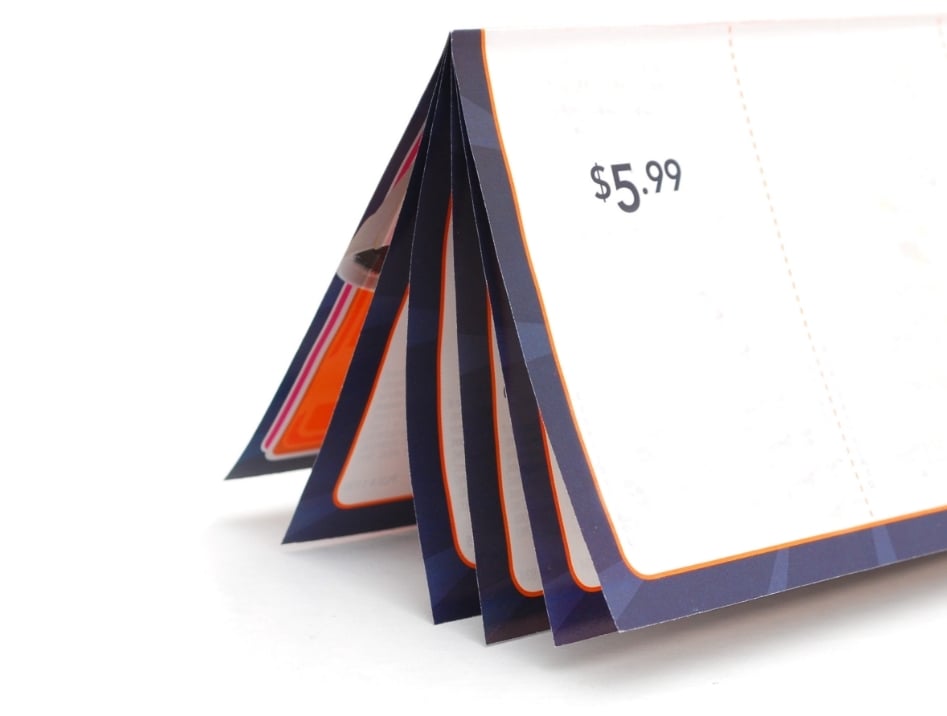
Wire staples driven through the folded spine. Pages nest inside one another, so the booklet stays light, opens flat, and runs fast on press. Built for lower page counts on flexible stocks — and the layout must come in multiples of four.

Best for
Shorter booklets, magazines, programs, newsletters, and brochures
№ 02 Adhesive

Perfect Binding

Pages are gathered, ground square at the spine, and glued into a wraparound cover — the paperback build. It needs enough page thickness to form a durable spine; in return you get a squared, printable spine and a polished, professional face. Pages do not open fully flat.

Best for
Catalogs, manuals, directories, and thicker booklets

№ 03 Wire / Coil

Wire-O & Coil Binding

Holes punched along the binding edge take double-loop wire or a continuous plastic coil. Pages lie dead flat and fold back fully — the working bindings, made for daily handling. The exposed edge and stiffness make mailing a challenge.

Best for
Workbooks, training manuals, calendars, and reference guides

№ 04 Thread

Singer Sewn Binding

A single run of thread sewn through the folded spine, where the staples would sit. It adds real strength without changing the booklet’s profile — extra durability, with a refined visible stitch.

Best for
Thicker saddle-stitched booklets and frequently handled pieces

№ 05 Thread

Thread Sewn Binding

Sections of pages are sewn together in groups before the cover goes on. The result is a spine that is both strong and flexible, built to survive years of handling. The trade is a more involved production.

Best for
Books, manuals, and publications meant for long-term use

№ 06 Wire

Side Stitching

Stitched or stapled through the entire stack near the binding edge, not through a fold. That takes page counts a saddle cannot hold; the trade is pages that do not open as wide.

Best for
Reports, proposals, and reference documents

№ 07 Hard cover

Case Binding

The page block is attached to a rigid hard cover — the most durable and most premium piece on this bench. Strong protection, a substantial feel, and a spine that shelves properly; it asks for the longest production time and the largest investment of the seven.

Best for
Annual reports, reference books, and high-value publications

BND 02 Choosing

Four factors that decide the method

Binding affects what the booklet looks like, how the pages turn, how the piece holds up, and whether it moves smoothly through the mail. Walk these four before you commit.

F1

Page Count & Thickness

Start with page count. Thin booklets on flexible stock saddle stitch cleanly. As the count climbs, perfect binding and thread sewing become the practical options, because both rely on spine thickness for their strength. Watch paper weight too — a heavy stock can rule a method out even when the page count is low.

Saddle-stitched booklet fanned open, showing its nested folded pages

F2

Purpose & Use

Think about the hands the booklet ends up in. Saddle-stitched, Wire-O, and coil-bound pieces open easily and lie flat — comfortable for reading, training, and reference. Perfect-bound and case-bound pieces trade that flexibility for structure and presentation, which suits catalogs, manuals, and publications meant to be kept.

Two people paging through booklet samples at a work table

F3

USPS Mailing Requirements

Mailing changes the equation. Saddle-stitched booklets are the easiest to mail: lightweight, and they flex through USPS processing equipment. Thick perfect-bound books often need extra tabbing and can classify as non-machinable. Wire-O and coil rarely mail well — exposed edges and stiffness make them hand-distribution pieces. We print and mail under one roof, so this check happens before anything prints.

Row of booklets bound with coil, wire, and glued spines

F4

Budget & Timeline

Saddle stitching and side stitching run fast and keep the cost down — the bindings for tight schedules. Perfect binding, thread sewing, and case work add production steps and turnaround. Set the binding with the calendar in view and the job stays on track.

Deadline note pinned to a production calendar

BND 03 For your files

Download the guide (PDF)

The full guide — seven methods and the four selection factors — as one PDF for your project folder or your next spec meeting.

Download the guide (PDF)

Booklet-Binding-and-Stitching-Guide-United-GMG.pdf · PDF · 768 KB

Bindery staff reviewing booklet binding samples together

BND 04 Your project

Need help choosing?

Every booklet comes together differently — the right method depends on page count, stock, use, and how it ships. Send the specs and our bindery will recommend the binding, with pricing against your budget and timeline. Printing, binding, and mailing from one Mount Prospect plant since 1927.

Request a quote

Or talk it through: 847.588.7600